
Much of my experience of parenting has been learning how much my daughter loves being in community. Her play spaces include a play kitchen, in which she “bakes” cupcakes for tea parties, a doctor set with which she “assesses and treats” her clients (mostly her Papa), and a whole community of stuffed animals that she regularly plays with. One day, we were getting ready for a walk outside and I found that a toy stroller was waiting with two stuffed elephants that Elly calls her babies. She walked with her Papa and I to the park with her babies until she realized that they had some problem (perhaps that their stuffing wasn’t sitting quite right). She stopped, got in front of the stroller and adjusted her babies so that they were more comfortable. Through the whole time we were at the playground, Elly enjoyed putting the babies on various playground rides.
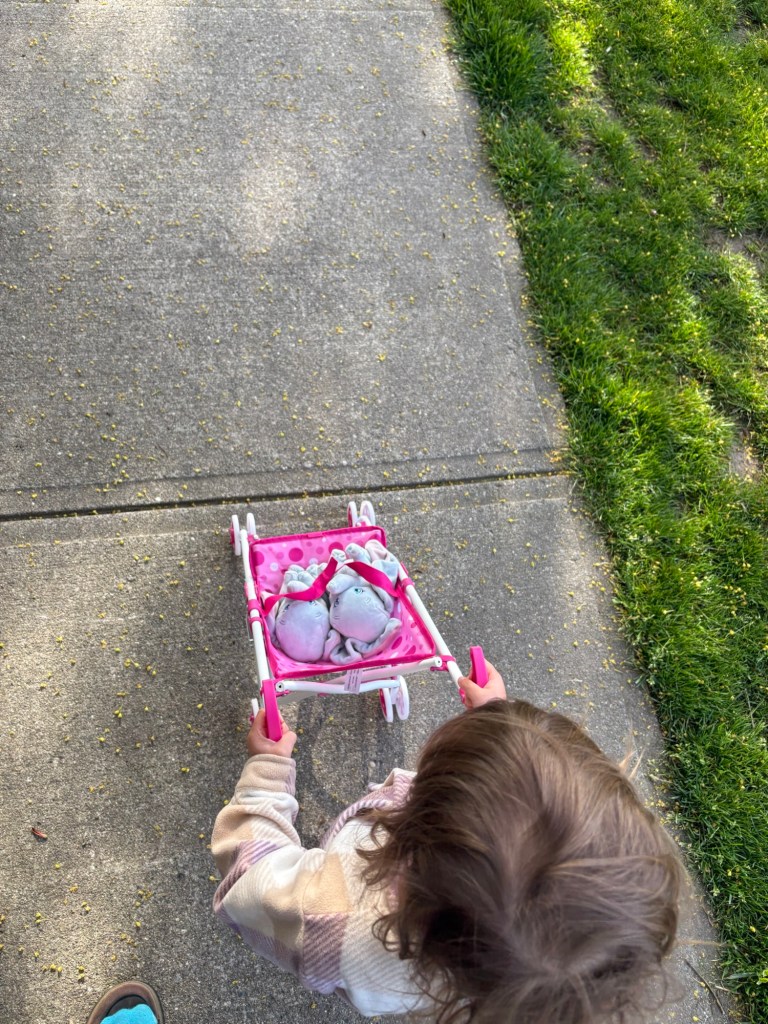
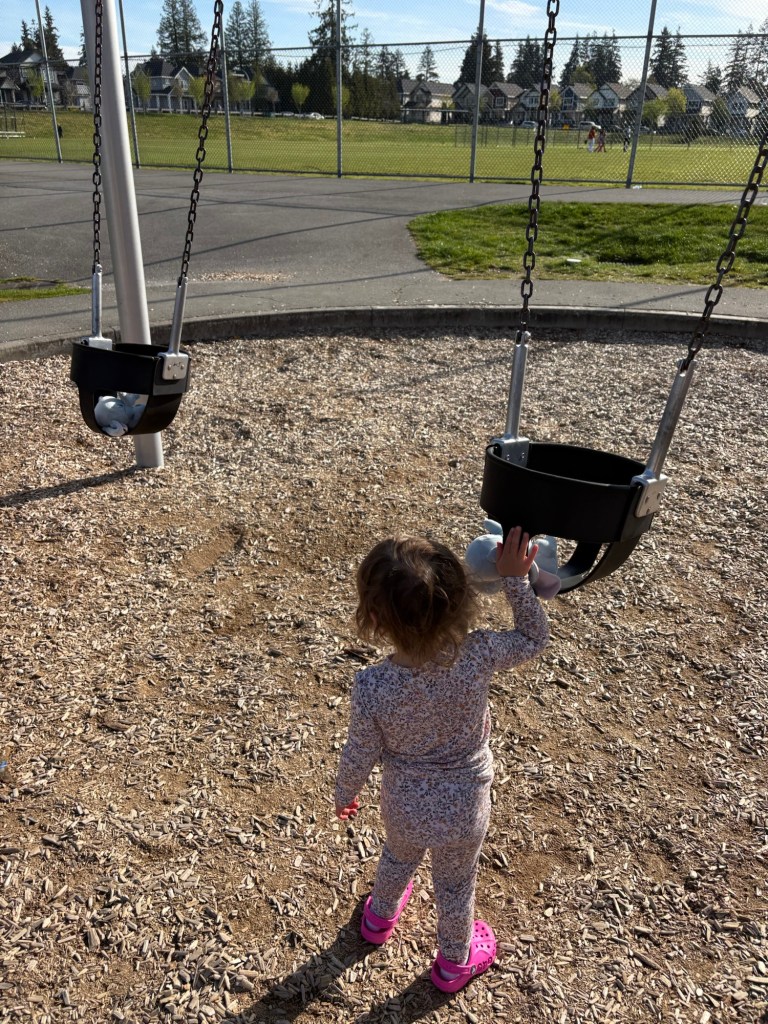
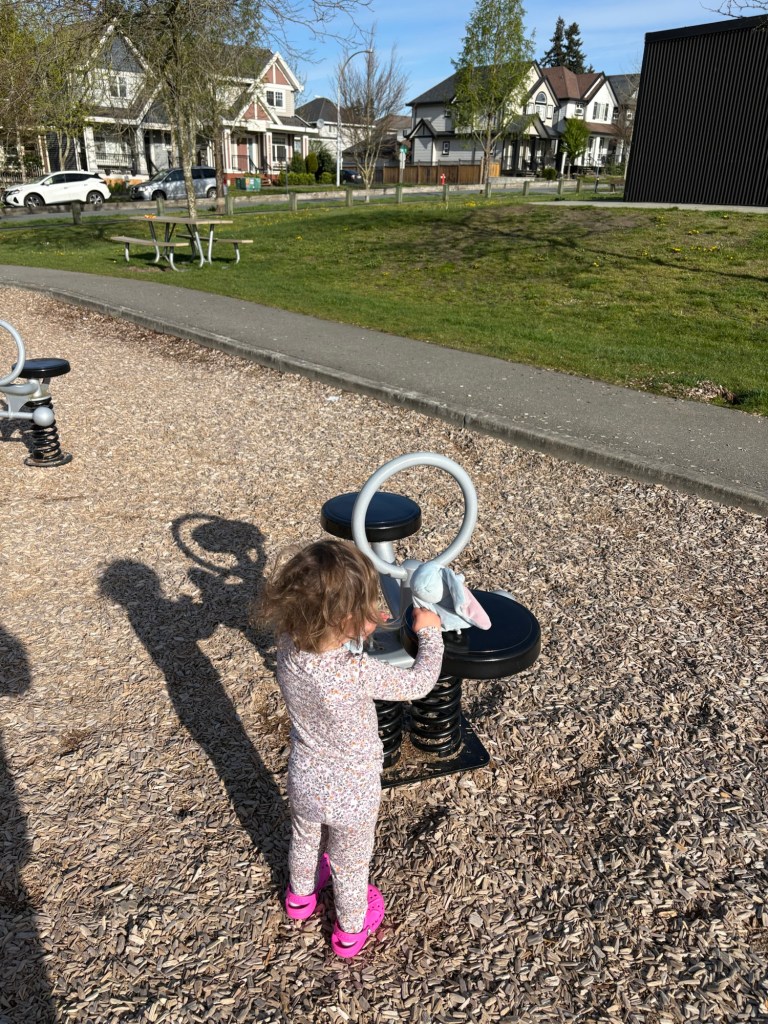
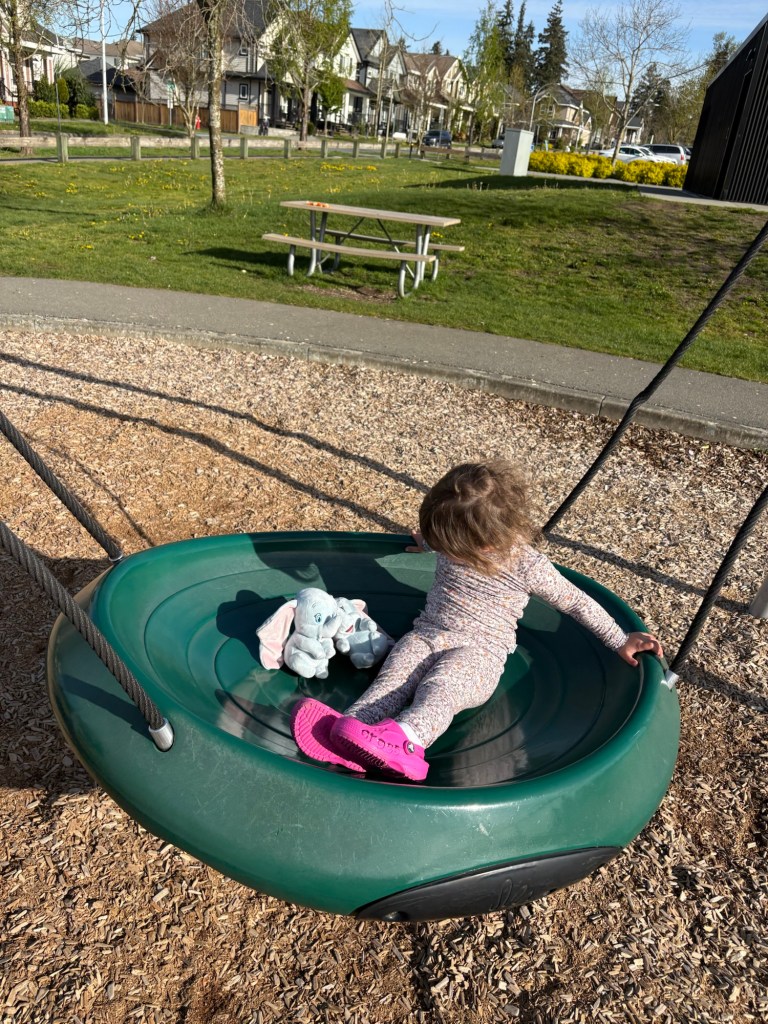
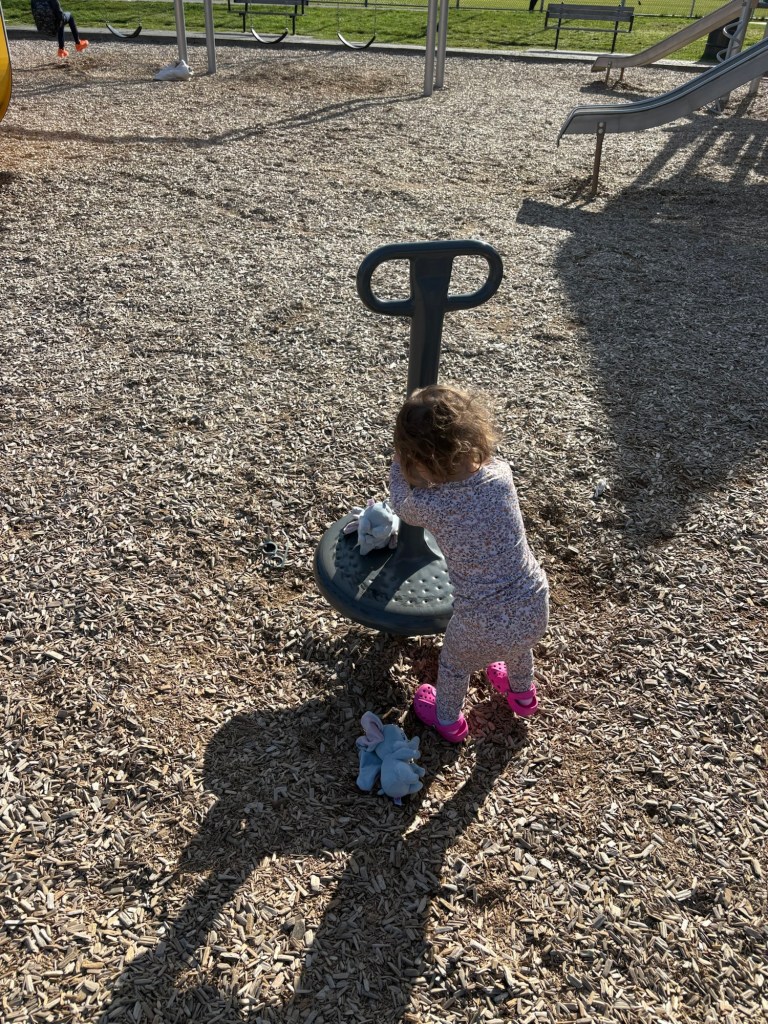
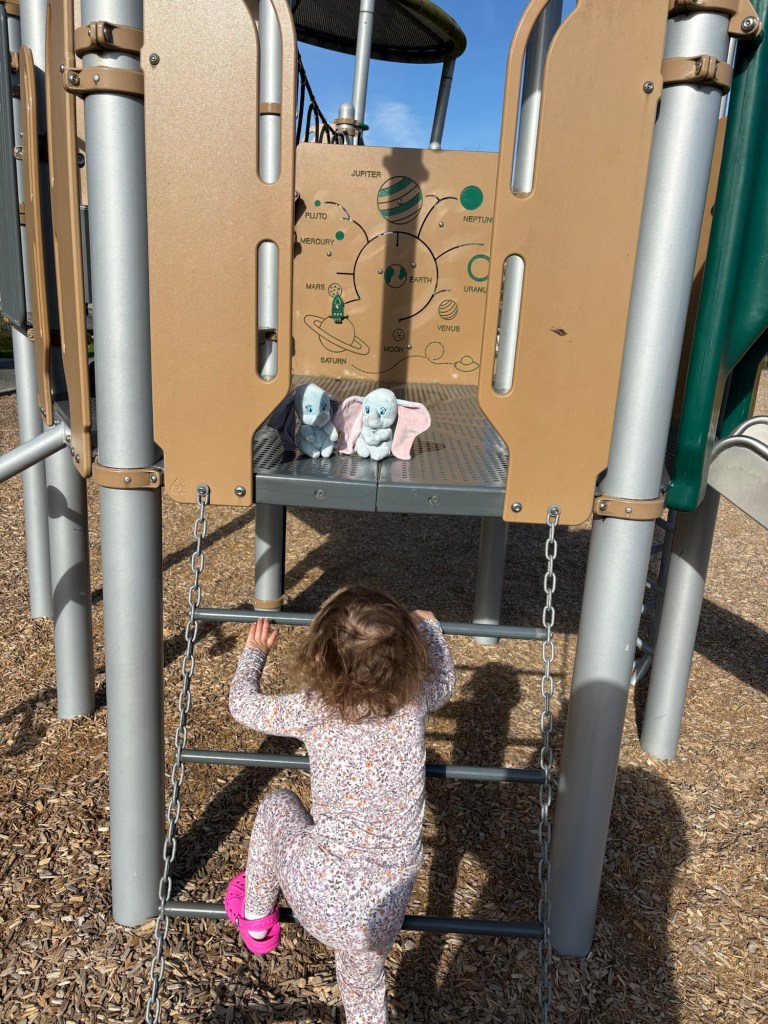
Even if it’s just play, my daughter loves community. Even if it is just the idea of community on this particular day with not as many hard lessons about sharing, taking turns, and acting kindly, my daughter showed me how much she loves caring for her “babies”.
Being in community can be a hard lesson for anyone in an individualistic culture, especially toddlers. In The Whole-Brain Child: 12 Revolutionary Strategies to Nurture your Child’s Developing Mind, Siegel and Bryson discuss how important acquiring mindsight is as you develop in your early years. I would say that the hardest part of their teaching for most toddlers is developing the “me to we” connection. While it is important to get toddlers to understand their own emotions and to tell stories that might give them a better understanding of how they can feel about something, a significant challenge comes in grasping the sacrifice necessary to turn-taking and sharing.
Whether it’s kids on the playground or adults learning how to communicate at work or build a family and household, developing a sense of community, where we genuinely look to serve others can be difficult.
Similarly to how Siegel and Bryson start their concept from understanding one’s own emotions and get into developing that sense of we, the apostle Paul goes from teaching how God through Jesus has brought us into the family of God and then goes into how we can walk by the Spirit with each other in the Epistle to the Galatians. While Siegel and Bryson and the Apostle Paul work to help people build healthy communities, the means and aims for their projects differ greatly. While Siegel and Bryson aim to use developmental neuropsychology to help parents have strategies to work with their children to feel calmer and more connected with them, Paul labours to get the Galatian church to understand the pitfalls of legalism and licentiousness that have created disunity among them.
Paul’s idea of unity in Galatians starts with this,
“I have been crucified with Christ. It is no longer I who live, but Christ who lives in me. And the life I now live in the flesh I live by faith in the Son of God, who loved me and gave himself for me.”
Galatians 2:20 ESV
As much as it can be helpful to our relationships to understand our emotions and the various states of ourselves, it is of supreme value to be crucified with Christ. Living by faith in the Son of God radically changes our lives. Teaching children of the life-transforming power of the work of Jesus can help us grasp these powerful truths ourselves in concrete ways.
The work of Jesus means that he prays for us to God even when we don’t have the words or strength to carry on:
“And because you are sons, God has sent the Spirit of his Son into our hearts, crying, “Abba! Father!””
Galatians 4:6 ESV
These truths are the foundation for our relationship with God in Christ and the formation of Christian community. Paul goes to write of our freedom from the law with a warning against using freedom as a licence to sin,
“For you were called to freedom, brothers. Only do not use your freedom as an opportunity for the flesh, but through love serve one another. For the whole law is fulfilled in one word: “You shall love your neighbor as yourself.””
Galatians 5:13-14 ESV
While I think it is important to engage our children in fun times and to connect through turning moments of conflict into fun, I also think that we can engage our children seriously, taking them seriously too.
While Siegel and Bryson opt out of prescriptive language about behaviour that builds up and behaviour that destroys, Paul gives us some much needed medicine. He lays out a list of “works of the flesh” Galatians 5:19-21 and provides a list of things that come as fruit of the Spirit:
“But the fruit of the Spirit is love, joy, peace, patience, kindness, goodness, faithfulness, gentleness, self-control; against such things there is no law. And those who belong to Christ Jesus have crucified the flesh with its passions and desires.”
Galatians 5:22-24 ESV
We need this fruit in our lives. Therapy doesn’t fully cover all that we need from God, but the Spirt does! He is our great Counsellor, our helper when our souls are most in need.
With all of that being said, I can see why Mindsight has been so impactful. We want to have joyous, fun-filled relationships with our children. I think the shows Bluey, Tumble Leaf, Daniel Tiger, and so on show the importance of fun in our relationships with children, but I think they are missing an important element that can build us up in our faith to love each other more deeply: the Spirit of Christ. So yes, developing community can be difficult, but we don’t have to it alone, especially when we have Christ in us bringing our needs to the Father as we trust in Him with faith.
I won’t pretend to know how this works and that is why I think it best to end this post with a question.
Do you know any resources that have helped you parent as a Christian?
What are some of the truths you bank on to help you as a parent and follower of Christ?
Thoughts, suggestions?


Leave a Reply